If you have ever struggled to reproduce a model’s performance despite locking down seeds and hardware, you are not alone. A new study published in Nature Machine Intelligence by researchers at the University of Sydney identifies a fundamental mathematical cause for AI unpredictability. The paper, titled 'Fractal basin geometry and the limits to predictability and reproducibility in deep learning,' argues that instability is inherent to the training landscape itself, not merely an artifact of engineering flaws or hardware inconsistencies.
The Fractal Nature of Training Landscapes
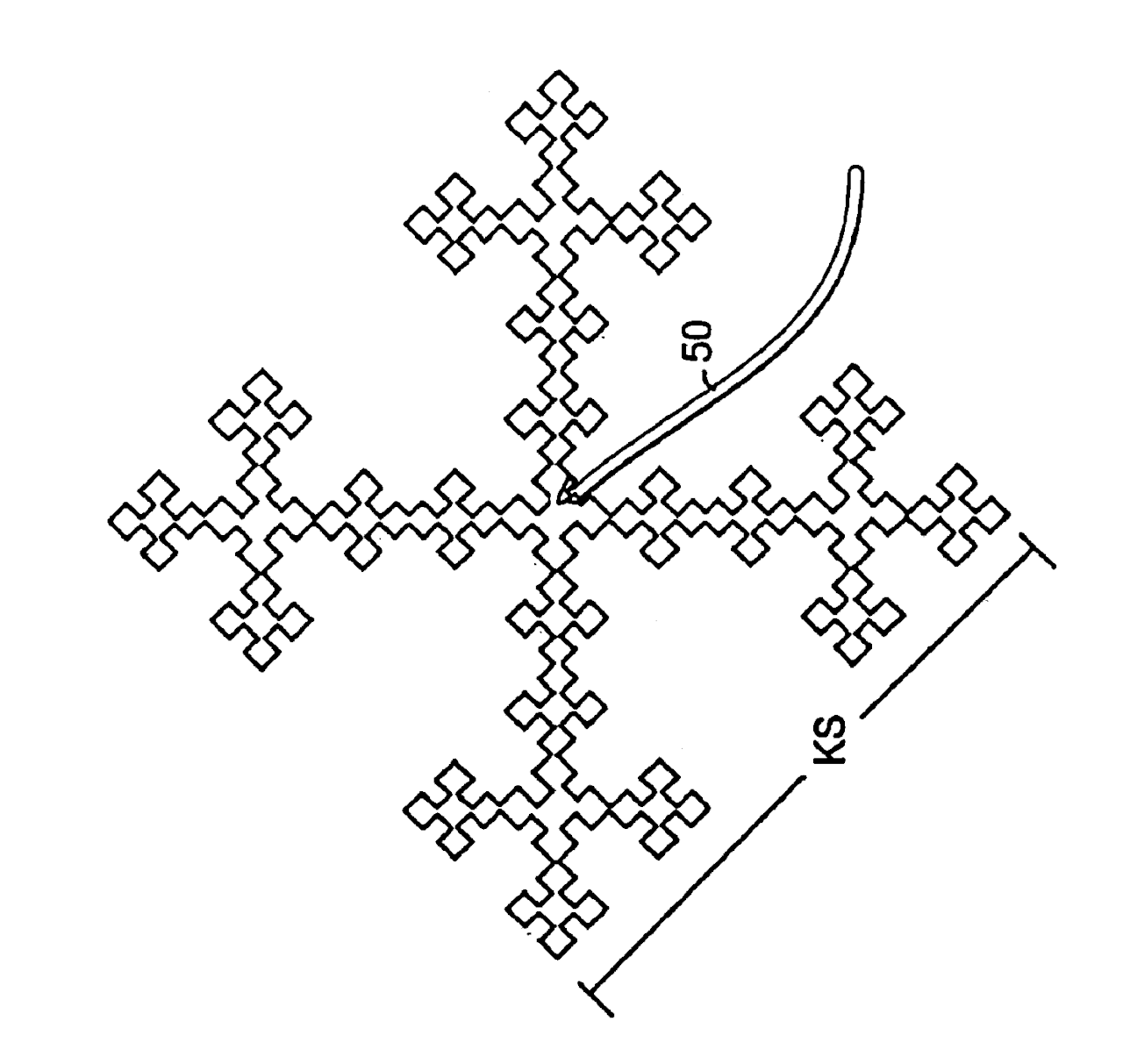
Professor Pulin Gong and PhD student Andrew Ly discovered that the 'basins of attraction'—regions of starting parameters that lead to specific outcomes—are organized as 'riddled basins.' In this fractal structure, every point lies arbitrarily close to points leading to different outcomes. No matter how much you zoom in, the regions remain interwoven. This means increasing the precision of initial settings often yields no improvement in reproducibility. In one image-recognition network, making starting settings 10 billion times more precise produced no measurable change, while altering them by a single bit sent training to a different configuration in nearly 48 percent of cases.
Performance Versus Predictability Trade-off
The research exposes a painful trade-off for builders: settings that maximize learning efficiency often make outcomes harder to predict. The team trained approximately 500,000 neural networks across various architectures and datasets. They found that reducing the learning rate made results reproducible but hindered learning effectiveness. This suggests that the 'chaos' we often try to engineer away is actually a side effect of how neural networks navigate complex loss landscapes to find optimal solutions. The effect persisted even in fully deterministic environments, ruling out hardware noise as the primary culprit.
Key Takeaways
- Unpredictability in AI is partly fundamental, rooted in fractal basin geometry rather than just hardware or data shuffling.
- Increasing parameter precision does not guarantee reproducibility; a single-bit change can alter outcomes in nearly half of cases.
- There is an inverse relationship between learning effectiveness and result reproducibility; higher learning rates boost performance but increase variance.
- The study utilized 500,000 neural networks to demonstrate that riddled basins appear across diverse architectures and tasks.
The Bottom Line
Stop blaming your GPU for non-deterministic results. The math itself is chaotic, and we need to redesign architectures, not just tweak seeds, to build truly trustworthy AI systems.