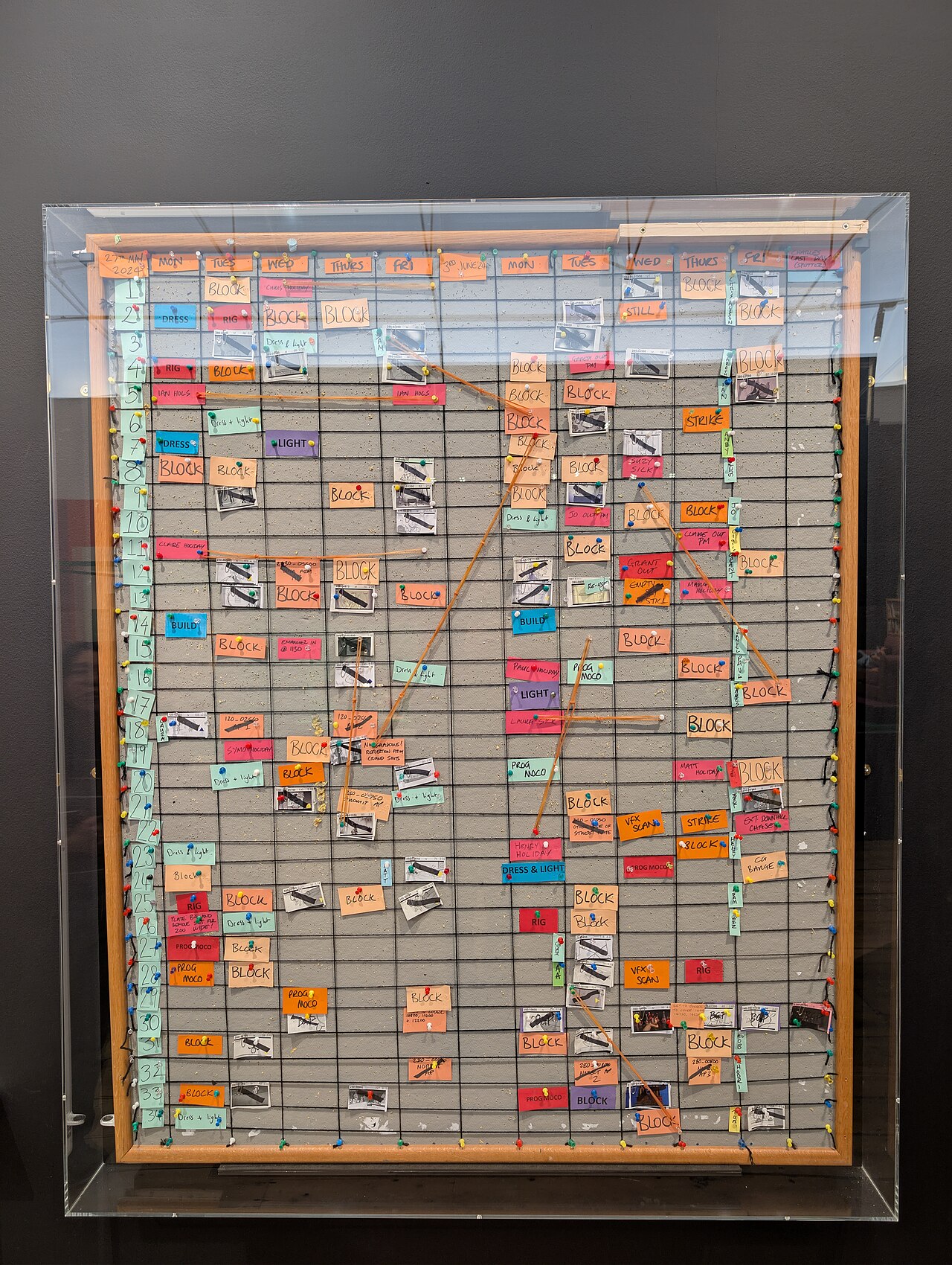
When a ticket lands on your desk saying "make our factory schedule smarter," the reflex is often to throw a large language model at it. Resist that urge. Production scheduling is fundamentally a constraint satisfaction problem, and the engineering challenge lies in accurately modeling the physical and operational limits of the plant, not in generating creative text. The real bottleneck is rarely the solver's ability to compute; it is the lack of documented rules that actually govern the line.
The Finite Capacity Reality
Most basic ERP logic operates on a flawed assumption: unlimited machine capacity. This allows systems to load three weeks of work onto a line that physically only has capacity for two. A robust scheduling model must enforce finite capacity, placing operations only where resources have actual room. This distinction is critical because it determines whether the generated plan can actually be executed on the shop floor or if it remains a theoretical exercise that planners must manually discard.
Inputs and Hard Constraints
The data pipeline starts with the ERP, pulling production orders, routings, bills of materials, work-center calendars, and stock levels. But the complexity emerges from the limits: line capacity, shift patterns, operator skills, maintenance windows, tooling availability, material arrival dates, and sequence-dependent changeover times defined by a changeover matrix. Plant-specific rules add further layers. In one documented dairy plant implementation, the model had to respect blast-freezer curves; a production run that clashes with freezer capacity is physically impossible, regardless of what an unconstrained model might suggest.
Solver Architecture and Output
Underneath the application layer sits a constraint-programming and mixed-integer model, typically leveraging CP-SAT or MILP solvers. The goal is not to find a single "perfect" answer, which is often an illusion in complex industrial environments. Instead, the system returns several feasible plans that trade off changeovers against overtime and late orders. Speed matters for human-in-the-loop decision making; in the dairy case study, the solver returns a week's worth of viable plans in just 90 seconds, allowing planners to compare scenarios quickly before committing to the ERP or MES with a full audit trail.
Key Takeaways
- The most valuable artifact is often the written list of rules extracted from a senior planner's head, not the code itself.
- Basic ERP logic assumes unlimited capacity, leading to unexecutable schedules; finite capacity modeling is non-negotiable.
- Solvers like CP-SAT or MILP should return multiple feasible plans for human comparison, not a single opaque result.
- Integration should keep the ERP as the system of record, with the scheduler providing approved plans and audit trails.
The Bottom Line
Stop treating scheduling as a generative AI problem and start treating it as a constraint satisfaction problem. The hard work isn't in the model's inference speed, but in the painstaking extraction of undocumented shop-floor rules from the heads of senior planners.