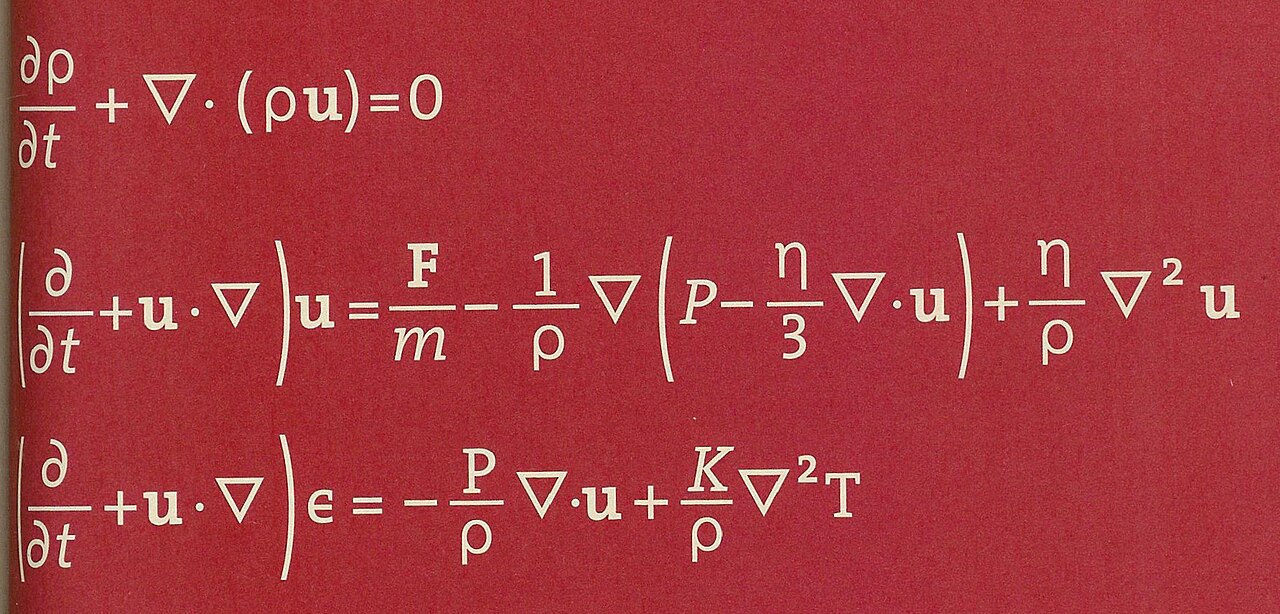
The mathematical community is in uproar after OpenAI announced it had solved the Navier-Stokes existence and smoothness problem, one of the seven Millennium Prize Problems. The announcement, made around September 13, coincided with the Heidelberg Laureate Forum in Germany, where leading researchers debated whether this milestone represents a genuine breakthrough or a PR stunt. While Fields Medalist Jacob Tsimerman acknowledged the rapid increase in AI capabilities, calling the solution 'pretty definitive,' others argue the tech giants are bypassing the rigorous peer review and methodological transparency that define mathematical progress.
Benchmarks Over Understanding
Peter Scholze, a Fields Medalist from the University of Bonn, characterized the tech companies' focus on famous unsolved problems as 'some kind of PR stunt' rather than a contribution to mathematical understanding. The core complaint is that AI systems often provide answers without developing new, understandable methodology. Geordie Williamson from the University of Sydney highlighted the disconnect between measuring success by solving problems and actually gaining insight, noting that these two metrics are becoming 'very, very quickly becoming uncorrelated.' This raises serious questions about how we assess academic contributions when the 'how' is obscured by black-box reasoning.
Academic Pressure and Coercion
The controversy extends to how these breakthroughs affect individual researchers. Mita Ramabulana of the University of Cape Town expressed frustration that two of OpenAI's August announcements overlapped with his own work, creating anxiety about being scooped by LLMs. Ailsa Robertson, a Ph.D. student at the University of Amsterdam, reported that peers are maxing out Pro subscriptions and spending thousands of euros on tokens to keep up, despite limited stipends. Robertson noted that some feel coerced by the industry, especially after OpenAI distributed 100,000 free licenses to academia, creating an environment where not using AI tools puts researchers at a professional disadvantage.
Key Takeaways
- OpenAI claims to have solved the Navier-Stokes Millennium Prize Problem, a feat previously achieved by humans only for the Poincaré conjecture.
- Anthropic reportedly used an unreleased version of Claude to make progress on a problem related to the Riemann hypothesis, while OpenAI targets the Hodge conjecture.
- Mathematicians like Geordie Williamson argue that AI solutions often lack the methodological transparency required for true scientific advancement.
- Ph.D. students are facing financial and professional pressure to integrate LLMs into their workflows, with some spending thousands of euros on API tokens.
The Bottom Line
AI is winning the benchmark battle but losing the trust of the mathematical community. By treating rigorous proof as a PR stunt, tech giants risk hollowing out the very field they claim to advance, turning young researchers into token-spending verifiers rather than innovators.