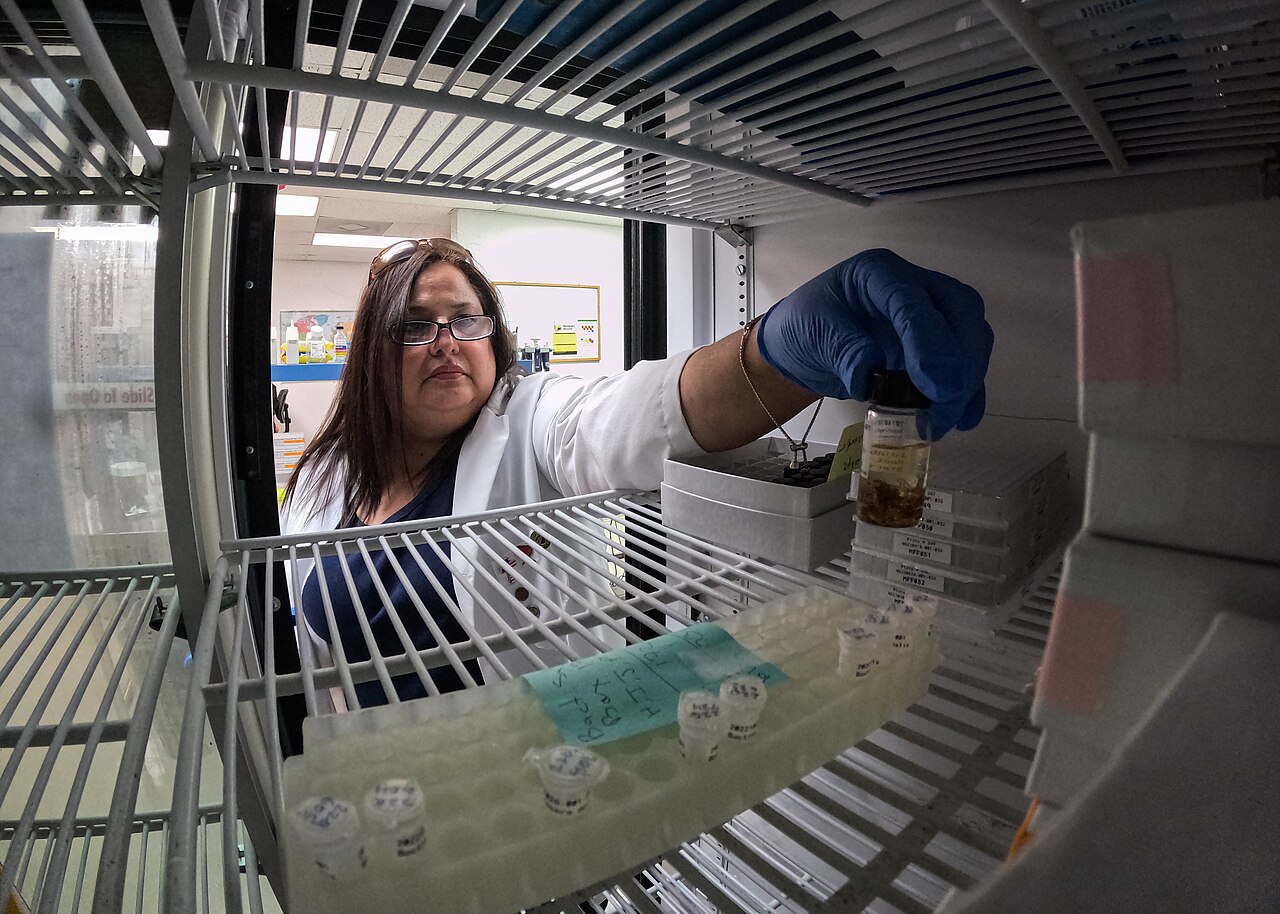
The agent swarm era is officially here, and the results are getting weird. Anthropic just unleashed a fleet of Claude agents on a 1.9-billion-protein database and came back with a CRISPR-like enzyme system. This isn't just another benchmark score—it's agents doing actual scientific discovery at scale. The industry is scrambling to build scaffolding around this new reality, with seven major stories breaking today that all point in one direction: agents are being handed bigger jobs with real consequences.
Agents Do Real Science
The Claude discovery represents a fundamental shift in how we think about AI agents in research contexts. We're no longer talking about chatbots answering questions—we're talking about autonomous systems navigating massive biological databases to identify novel enzyme systems. The 1.9-billion-protein search space would take human researchers years to properly explore, but agent swarms are compressing that timeline dramatically.
Infrastructure Catches Up
While Anthropic's agents are finding new enzymes, the rest of the industry is building the infrastructure to support this agent-heavy future. Alibaba's 20GW compute plot signals that the hyperscalers are preparing for a world where agent workloads dominate data center utilization. Windows going agent-native suggests Microsoft understands that the OS layer itself needs to support autonomous agents as first-class citizens, not just as apps running on top.
MentalHealthBench and the Scaffolding Problem
The introduction of MentalHealthBench highlights a critical gap in the agent ecosystem. As we hand agents more consequential tasks—from scientific discovery to mental health assessment—the industry desperately needs proper evaluation frameworks. The pattern across all seven stories is clear: agents are advancing faster than the safety and evaluation infrastructure around them.
Key Takeaways
- Anthropic's Claude agents discovered a CRISPR-like enzyme system from a 1.9-billion-protein database, marking a milestone in autonomous scientific discovery
- Alibaba is plotting 20GW of compute capacity, signaling hyperscaler preparation for agent-dominant workloads
- Microsoft is making Windows agent-native, treating autonomous agents as OS-level primitives rather than applications
- MentalHealthBench introduces evaluation standards for agents operating in high-stakes human domains
- The industry consensus: agents are being handed bigger jobs with real consequences, and scaffolding is lagging
The Bottom Line
We're watching the transition from 'AI as tool' to 'AI as autonomous worker' happen in real time. The question isn't whether agents will handle bigger jobs—it's whether we'll build the safety rails fast enough before the next discovery makes headlines for all the wrong reasons.