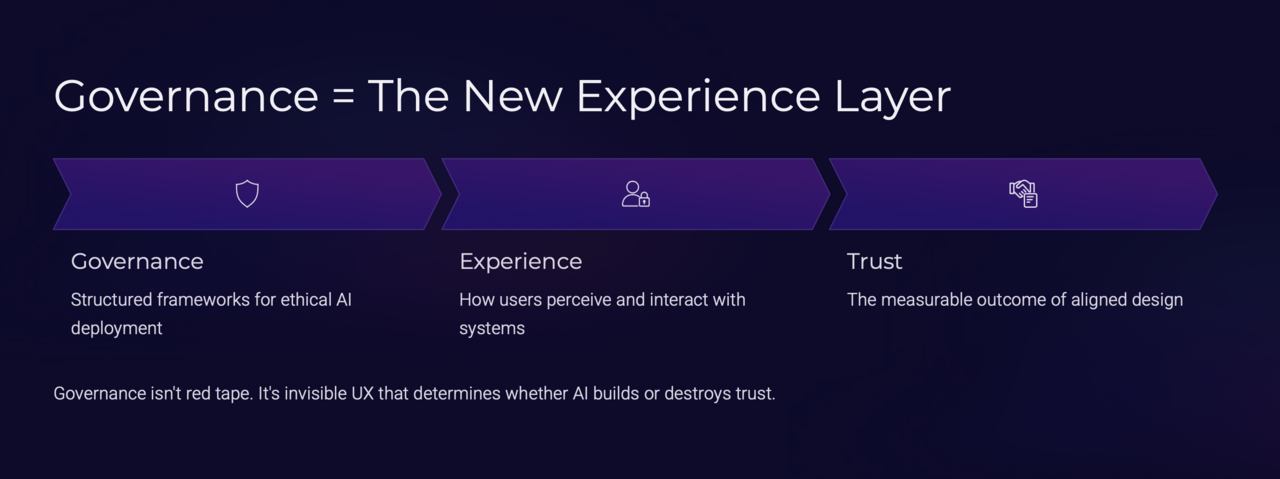
A discussion emerging from Hacker News is zeroing in on a question that the AI industry has largely sidestepped: who exactly governs what autonomous agents are permitted to execute? The conversation, referencing a paper hosted on Zenodo (record 22003768), suggests that as these systems grow more capable and autonomous, the governance frameworks meant to constrain them haven't kept pace. The HN thread attracted modest engagement—only 4 points at publication—but the underlying concern reflects a growing tension in the AI community.
Why This Matters Now
The traditional approach to AI safety has focused on alignment—making sure models do what their operators intend. But autonomous agents introduce a different problem: once you hand an agent access to APIs, code execution environments, or real-world systems, the question shifts from 'what does it want' to 'who authorized this action and under what constraints?' Unlike a chatbot that generates text, an agent that can browse the web, send emails, or modify files creates irreversible consequences. The governance layer simply hasn't caught up with those capabilities.
The Technical Governance Problem
From a systems design perspective, autonomous agents operate across multiple trust boundaries. They might execute code on user machines, interact with third-party APIs, or make decisions based on real-time data—all while their operators assume they're operating within defined parameters. The Zenodo paper appears to examine how these multi-layered execution contexts create accountability gaps. When an agent takes an action that crosses from simulation to reality, existing frameworks offer little guidance on who bears responsibility: the developer, the operator, or the system itself?
Industry's Reluctance to Engage
Major AI labs have been characteristically quiet on governance specifics for autonomous agents. Their safety documentation focuses heavily on model behavior in isolation rather than deployed agentic systems operating over extended timeframes. Anthropic's Responsible Scaling Policy and OpenAI's usage policies address some deployment concerns, but neither provides comprehensive frameworks for ongoing agent autonomy. This isn't necessarily malicious—it's a reflection of how quickly capability has outpaced institutional thinking. The companies building these systems are still figuring out what they can do; governance frameworks feel like a later problem. That deferral, however, creates real-world exposure that researchers and practitioners increasingly view as untenable.
Academic Context
The academic community has begun addressing this gap with research examining agent accountability structures. Stanford's Human-Centered AI Institute has published work on the governance challenges posed by autonomous systems, while NIST's AI Risk Management Framework offers preliminary guidance on AI lifecycle governance that some practitioners have attempted to apply to agent deployments. However, these frameworks were largely designed for static models rather than dynamic agents capable of multi-step execution chains.
What Comes Next
The conversation on Hacker News hints at growing consensus that governance can't be an afterthought—it needs to be architected into agent systems from the ground up. This would mean explicit permission hierarchies, audit trails for autonomous decisions, and clear escalation paths when agents encounter situations outside their defined scope. Whether the industry moves toward voluntary standards or regulatory requirements remains to be seen, but the technical groundwork for meaningful governance is finally becoming a topic worth discussing seriously.
Key Takeaways
- Autonomous AI agents operate across trust boundaries that existing frameworks don't adequately address
- The gap between model safety research and deployed agentic systems creates accountability vacuums
- Industry has focused on alignment in isolation rather than governance of autonomous deployment
- Technical solutions (permission hierarchies, audit trails) exist but require architectural commitment
The Bottom Line
The silence from major labs on agent governance isn't a feature—it's a liability waiting to crystallize. As autonomous agents graduate from demos and research projects into production systems making real decisions, the question 'who governs what they execute' stops being academic. Someone needs to answer it before the answers are made for us.