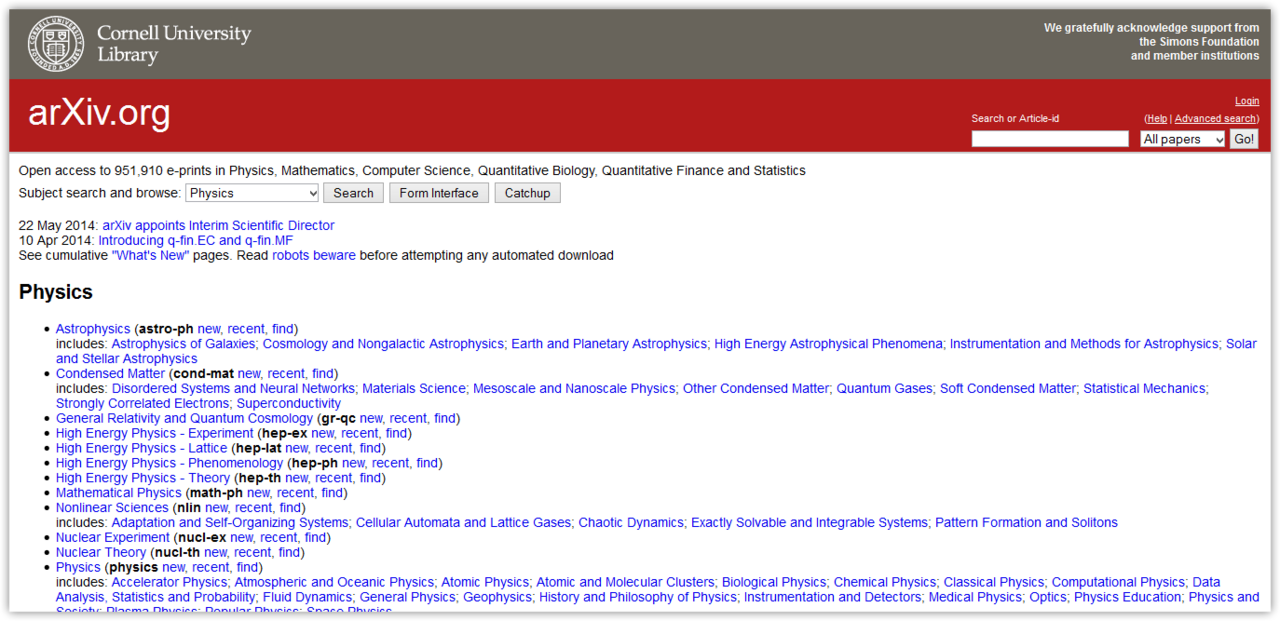
ArXiv's mathematics preprint server has become the latest battleground in the ongoing debate over AI-generated academic content, with observers noting a surge to nearly 600 submissions in a single day—and skepticism about quality running high.
The Volume Problem
The observation surfaced on Hacker News when a user flagged that ArXiv's "new" math submissions queue had ballooned to contain roughly 600 papers in a single day. While the preprint server has always been a high-throughput venue for rapid research dissemination, the concern isn't just volume—it's signal-to-noise ratio. The original poster was blunt: most of it looks like AI slop.
Why This Matters for Research Infrastructure
For builders working on tools that ingest or index academic literature, this trend raises practical questions about filtering and quality assurance. ArXiv has no formal peer review gate—it operates on honor systems and community moderation after publication. When volume spikes with potentially low-quality AI-generated content, the downstream effects ripple through citation networks, semantic search indexes, and automated literature review pipelines. If your RAG stack is trained on contaminated data, you're shipping garbage to your users.
The Community's Take
The Hacker News discussion drew modest engagement (6 points, 2 comments), suggesting this issue hasn't yet hit mainstream awareness—but researchers in the comments weren't surprised. One recurring theme: it's becoming harder to distinguish genuine novel contributions from papers that look sophisticated but lack real mathematical insight. AI can generate plausible-looking proofs and technical writing; whether those proofs are correct or meaningful is another matter entirely.
What Comes Next
ArXiv has faced content quality questions before, but the AI era has amplified them significantly. The platform hasn't announced any changes to its submission pipeline, though community pressure may eventually force some reckoning with automated detection or enhanced moderation. For developers building on top of ArXiv data—or any academic corpus right now—the writing's on the wall: you need robust deduplication, provenance tracking, and ideally some form of quality scoring that goes beyond just checking for plagiarism.
Key Takeaways
- ArXiv's math new submissions are hitting ~600 papers per day, raising quality concerns
- No peer review gate means low-quality AI content can flood the platform unchecked
- Builders ingesting academic data need stronger quality filters and provenance checks
- The community sees this as a growing signal-to-noise problem, not just an edge case
The Bottom Line
The research infrastructure stack wasn't built for a world where generating 600 math papers costs essentially nothing. Until platforms like ArXiv implement meaningful quality controls—or the community develops better tooling to filter AI slop upstream—anyone building on academic data needs to treat their sources as potentially contaminated.