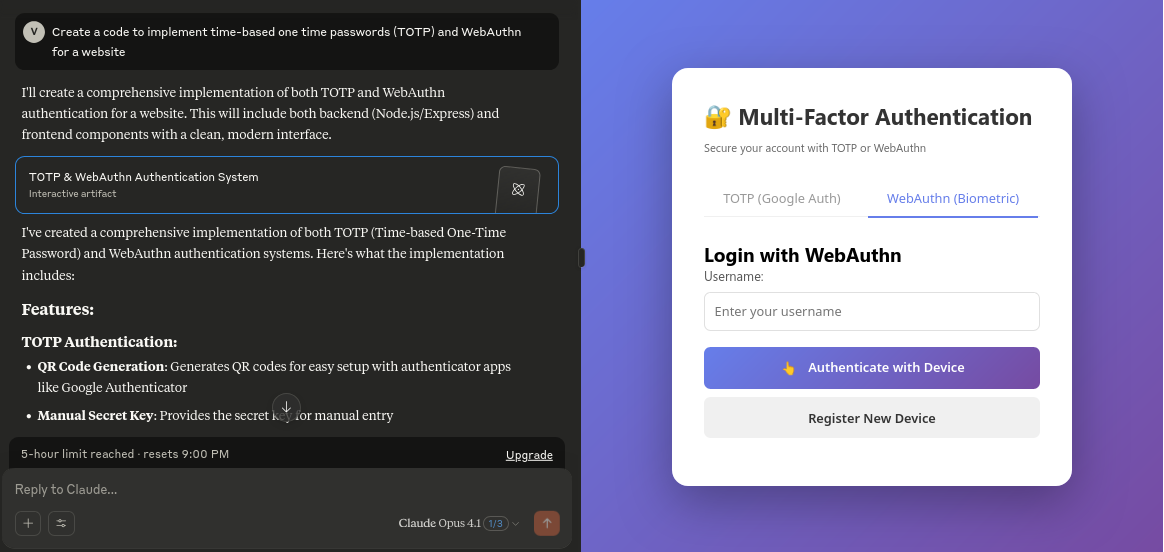
On May 22, 2025, Anthropic officially launched Claude 4 series—two models designed to fundamentally shift how developers interact with AI programming tools. The flagship Claude Opus 4 immediately staked its claim as the "world's best programming model," a bold assertion backed by some genuinely eye-opening benchmarks that suggest we're entering a new phase of AI-assisted development.
Benchmark Wars: 72.5% SWE-Bench
The number that matters most here is 72.5% on SWE-bench, the industry standard for evaluating language models on real-world software engineering tasks from GitHub repositories. That's not just competitive—it's the highest score recorded to date. For context, earlier Claude versions and competing models hovered in the 40-60% range. Crossing that 70% threshold means Opus 4 can reliably tackle complex, multi-file bugs and feature implementations that would have stumped previous generations of coding assistants entirely.
Beyond Code Snippets
Here's what's actually significant beyond the headline numbers: traditional AI programming tools operate at the granularity of a single function or file. Claude Opus 4 understands entire project architectures, enabling cross-file refactoring while maintaining consistency across thousands of operational steps. It can sustain focused work for hours on end, remembering context that spans multiple sessions. This isn't an incremental improvement—it's the architectural foundation for treating AI as a genuine collaborative partner rather than a fancy autocomplete engine.
Toolchain Integration Is Everything
Anthropic clearly learned from the integration gaps that plagued earlier AI coding tools. Claude 4 ships with native support for GitHub, VS Code, JetBrains IDEs including IntelliJ and PyCharm, plus AWS and GCP cloud platforms. The deep IDE integration means Opus 4 can understand your cursor position, project structure, and recent changes in real-time—moving beyond chat-based interactions into something that actually feels like pair programming with an agent that never gets tired or distracted.
Two Tiers, One Vision
Sonnet 4 occupies the mid-tier position: faster response times, lower operational costs, optimized for everyday coding tasks. Think code reviews, boilerplate generation, debugging sessions—work where you need reliable assistance without the full weight of Opus 4's capabilities. Sonnet 4 serves a different use case than its flagship sibling but shares the same architectural improvements over previous generations: better long-context reasoning, improved tool usage, and more consistent outputs across complex multi-step tasks.
Key Takeaways
- SWE-bench 72.5% sets new industry benchmark for coding AI performance
- Project-level understanding enables cross-file refactoring traditional tools can't match
- Native GitHub, VS Code, JetBrains, AWS, GCP integration removes workflow friction
- Multi-session memory and long-task support unlock agentic development patterns
- Sonnet 4 balances speed and cost for routine development work
The Bottom Line
Claude 4 doesn't feel like an upgrade—it feels like category creation. Anthropic isn't just selling a better autocomplete; they're building the infrastructure layer for AI-native development workflows where developers transition from writing code to orchestrating agents that write code. Whether you're ready or not, that shift is coming.