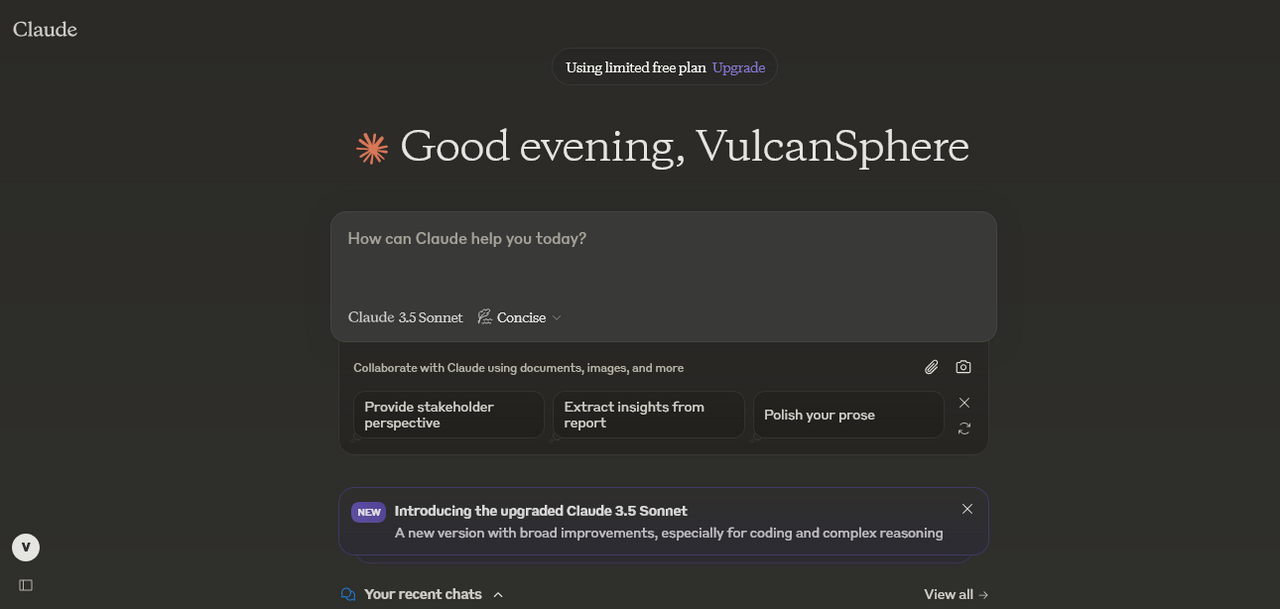
Anthropic is set to launch Claude Opus 4.7 and a new AI-powered design tool this week, according to a report from The Information. The update marks another incremental iteration on Anthropic's flagship model line, following the pattern established with Opus 4.6. But it's the second product in this launch that's turning heads: a prompt-based design tool that lets users generate website layouts and presentation decks using natural language.
Design Is the New Frontier
The design tool represents Anthropic's most aggressive push into visual AI yet. Until now, Claude has been primarily a text and code powerhouse—impressive reasoning, solid coding capabilities, but not really a visual tool. This changes that calculus entirely. By building a dedicated application on top of Claude's multimodal capabilities, Anthropic is going head-to-head with Canva, Microsoft Designer, and the image-generating features in OpenAI's GPT-4o. The question isn't whether Claude can generate visuals; it's whether Anthropic can build a compelling product experience around that capability.
Enter Claude Mythos
Separately, The Information reports that Anthropic is testing a model called Claude Mythos for cybersecurity applications. This name breaks from the established Opus/Sonnet/Haiku hierarchy, suggesting either a specialized security-focused fine-tune or an entirely new model tier. Given the growing enterprise and government interest in AI for threat detection and vulnerability analysis, Mythos could be Anthropic's play for the high-stakes security market—a space where reasoning capabilities matter as much as raw knowledge.
Key Takeaways
- Claude Opus 4.7 drops this week as an incremental update to Anthropic's flagship model
- New design tool lets users generate websites and presentations via natural language prompts
- Claude Mythos is being tested for cybersecurity, hinting at a specialized model pipeline
- Anthropic is now competing directly with Canva and Microsoft in the design AI space
The Bottom Line
This launch shows Anthropic getting serious about product surface area. Opus 4.7 keeps the model game competitive, but the design tool is the real story—it's a vertical application built on Claude's capabilities, not just another API endpoint. If the tool delivers real fidelity, Anthropic could carve out a significant chunk of the creative AI market. And Mythos? That's the sleeper. If it proves superior for security reasoning, we're looking at Anthropic's answer to OpenAI's rumored Strawberry project and Google's quest for truly superintelligent models.